
Lombard’s Place in the American Story
/Lombard’s Place in the American Story
Anniversaries ask us to look back. The most meaningful ones also ask what we will carry forward.
As we celebrate the United States 250th anniversary, communities across the country are reconsidering their place in the national story. Lombard’s history offers a particularly rich answer. The village’s past touches some of the central forces that shaped the United States: Indigenous presence and displacement, the struggle against slavery, westward settlement, the rise of the railroad, the fight for fair housing, and the civic impulse to preserve history itself.
These are not separate stories. Together, they show how national ideals and conflicts took shape here, in the lives and decisions of local people.
A Society Created by Looking Back
The Lombard Historical Society began during an earlier anniversary.
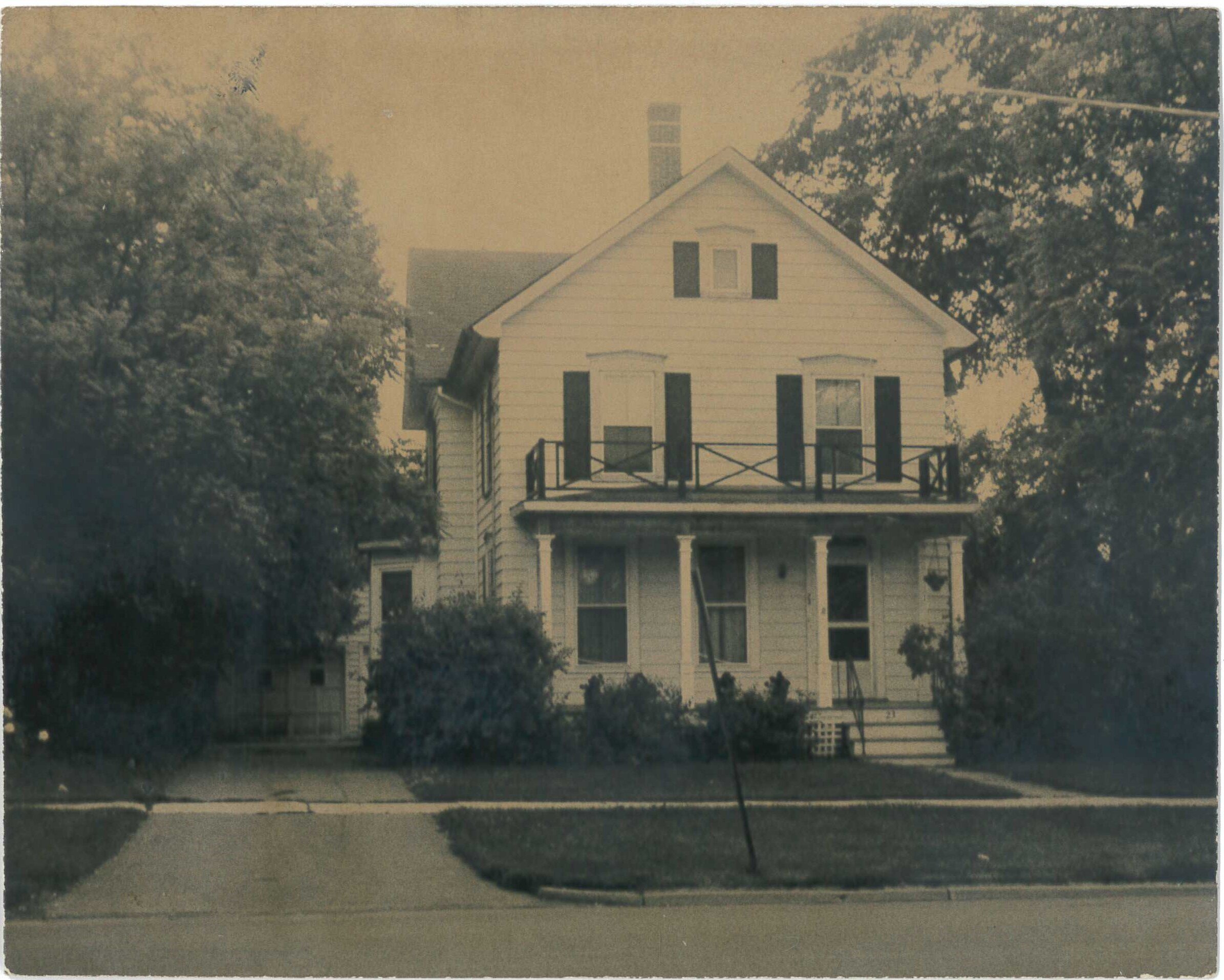
23 W. Maple Street 1971
As Lombard prepared to celebrate its centennial in 1969, residents became increasingly aware of what the community stood to lose. Buildings were changing, longtime residents were passing away, and photographs, documents, objects, and family stories remained scattered throughout the village.
The centennial created momentum. In April 1970, 175 charter members established the Lombard Historical Society to preserve and interpret the community’s past.
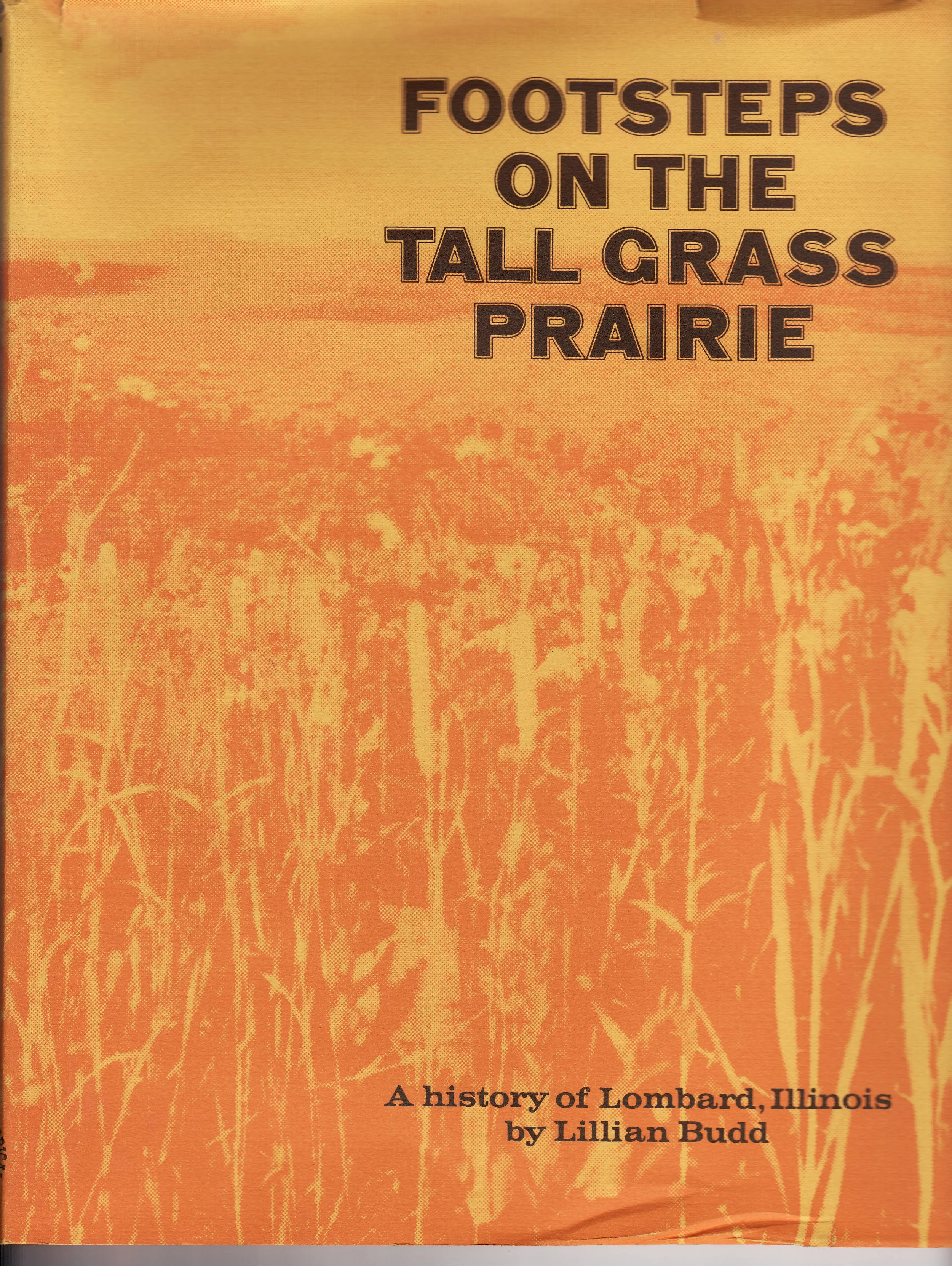
The nation’s Bicentennial gave the young Society its next major undertaking. Lombard was officially recognized as a Bicentennial Community, and the first project approved by the local Bicentennial Commission was a comprehensive history of the village. Published by the Historical Society as a 1976 American Revolution Bicentennial project, Footsteps on the Tall Grass Prairie was created through the research, recollections, photographs, fundraising, and labor of what its editors called “a small army of volunteers.”
The pattern is worth remembering. An anniversary encouraged people to look back. Looking back led them to build an institution. That institution continues to uncover, preserve, and reconsider Lombard’s history more than half a century later.
The nation’s 250th anniversary offers another such moment.
The Story Did Not Begin with Lombard
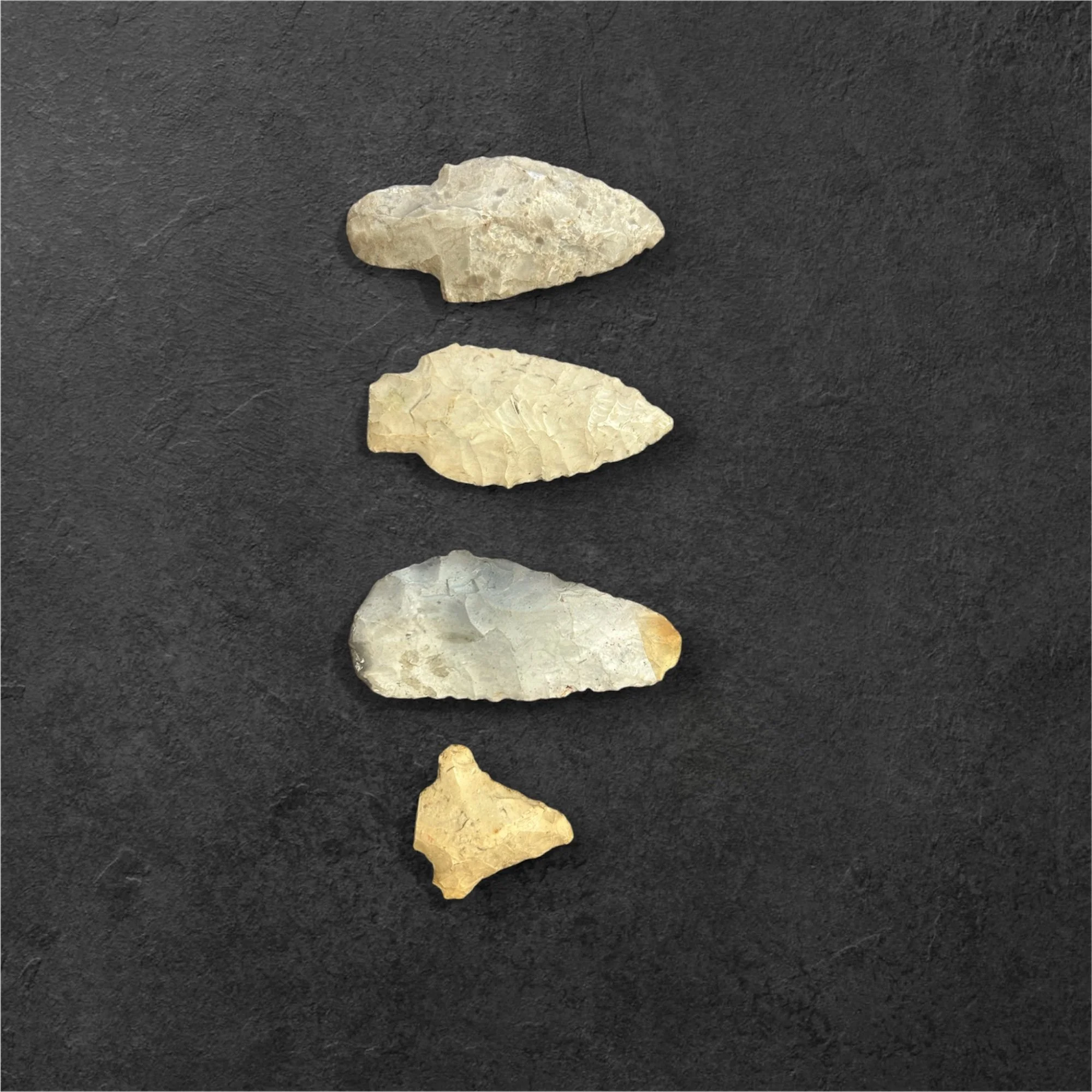
The Gary Collection, Lombard Historical Society, Collection.
Any honest account of Lombard’s history must begin before the village existed.
That work has changed where the community’s story begins.
Artifacts donated to the Historical Society in 1972 were long described simply as four arrowheads of unknown age. A recent reexamination conducted with the Illinois State Archaeological Survey revealed something far more significant. The oldest object, a Fox Valley dart point dating to approximately 6000 BCE, provides evidence of human activity within present-day Lombard nearly 8,000 years ago. Other objects in the collection represent later periods of Indigenous activity extending across thousands of years.
These objects cannot tell us the names or complete stories of the people who made and used them. They do tell us that this landscape was known, traveled, and revisited for millennia.
By the nineteenth century, the wider DuPage region was part of the ancestral homelands of the Council of Three Fires—the Ojibwe, Odawa, and Potawatomi—and was also connected to other Native nations. Potawatomi communities lived, hunted, harvested, and traded throughout the area before treaties, land cessions, and forced removal opened it to intensified Euro-American settlement.
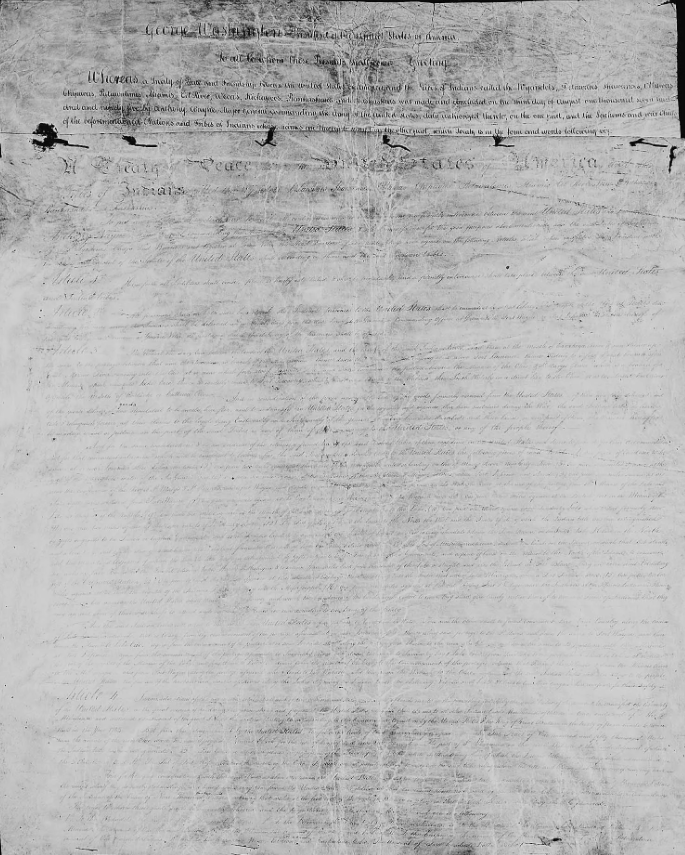
Treaty of August 3, 1795, also known as the Treaty of Greenville. The Treaty of Greenville set a precedent for objectives in future treaties with Native Americans — that is, obtaining cessions of land, advancing the frontier through white settlement, and obtaining more cessions through treaties.
This history is not a preface to Lombard’s story. It is part of the story itself.
This history is not merely an introduction to the story of Lombard. It changes the story. Babcock’s Grove was not established on an empty landscape, and the nation’s expansion cannot be understood only as a story of opportunity and progress. It also involved dispossession and the removal of people from places they had known for generations.
It also complicates the familiar story of American progress. The nation’s growth created opportunity, but that opportunity was not shared equally, and it often came at a profound cost.
Freedom in an Unfinished Nation

Sheldon Peck, TINTYPE, Mertz-Golden Collection, 1860s.
Sheldon Peck offers another striking connection between Lombard and the nation’s founding.
Peck was born in 1797, just 21 years after the Declaration of Independence was adopted. The United States was still young, and the meaning of its promises remained unsettled. The country proclaimed liberty while continuing to permit the enslavement of millions of people.
After settling with his wife, Harriet, in Babcock’s Grove, Peck became a politically active abolitionist. Antislavery meetings were held at the family’s home, and Peck worked within a regional network of reformers.
The 1839 Sheldon Peck Homestead is now included in the National Park Service’s Network to Freedom as a documented Underground Railroad site.

Babcock’s Grove, Map, York Township, 1862.
The importance of this history extends beyond Peck himself. Recent Historical Society research into a Black man remembered in Peck family records as Old Charley has sought to recover the lives and movements of freedom seekers whose stories were less likely to be preserved in written records. That shift in perspective matters. The Underground Railroad was not primarily a story of white rescuers. It was driven by enslaved people who made the decision to seek freedom and assumed the greatest risks.
The Peck Homestead places Lombard within the national struggle over slavery, but it also asks us to consider how history is recorded: whose names survived, whose actions were documented, and whose lives must now be reconstructed from fragments.
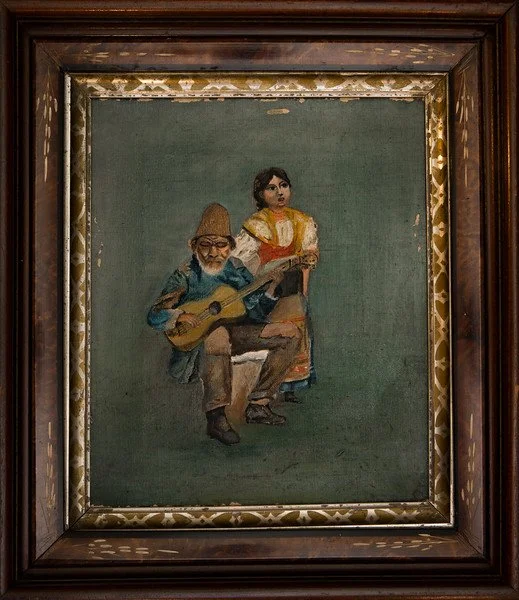
“Old Charley”, Oil on Canvas, Susan Peck, Sandy SCHROEDER Collection, 1854.
That history matters not only because of what the Pecks believed, but because of what they were willing to risk.
Their story reminds us that the nation’s ideals have often depended on private citizens choosing to act before the law, the majority, or public opinion caught up. History is shaped not only in legislatures and courtrooms, but also in homes, churches, meeting rooms, and communities where people decide whether injustice will be tolerated.
The Tracks That Changed the Community
While residents debated the future of slavery and the nation, another force was reshaping Babcock’s Grove.
By the late summer of 1849, the Galena and Chicago Union Railroad was operating through the settlement. The first timetable included Babcock’s Grove as a stop between Chicago and Turner Junction, now West Chicago. According to local accounts, families arrived early and waited for hours to witness the first train.
The railroad connected local farmers and businesses to Chicago, accelerated the movement of people and goods, and encouraged homes and commerce to gather around the station. It did not simply pass through the community; it helped determine where and how the future village developed.
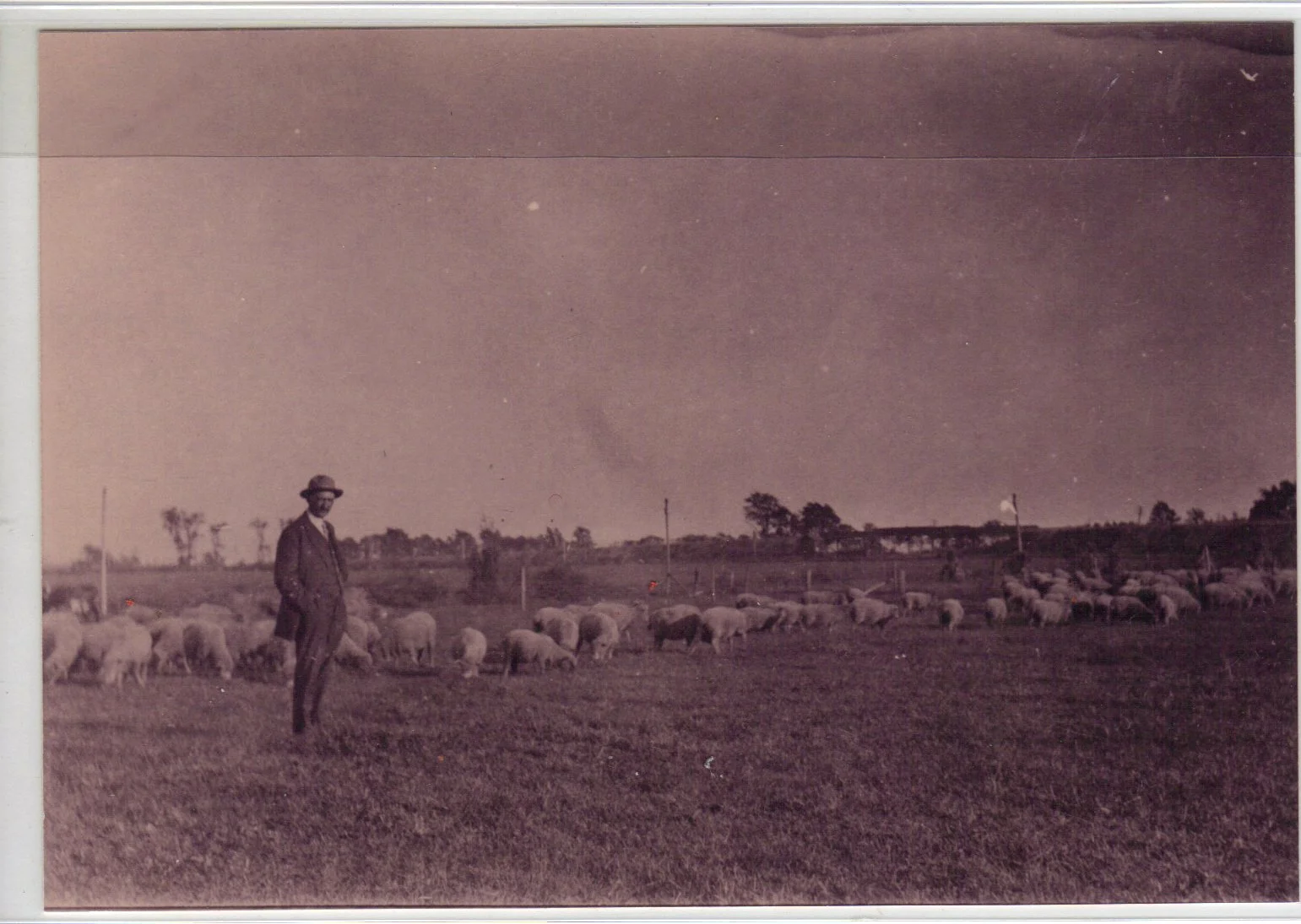
Frank Peck, Looking North towards what is Union Pacific today and the Great Western Trail, mertz Peck Collection, 1910s.
The tracks remain at the center of Lombard today. They are a daily reminder that the forces that transformed nineteenth-century America—technology, commerce, migration, expansion, and urban growth—also transformed this place.

Ellen martin, Lombard Historical Collection.
When “All Citizens” Meant All Citizens
In 1891, Lombard became the setting for another challenge to the limits of American democracy.
Attorney Ellen A. Martin lived on West Maple Street and commuted to her law office in Chicago. On April 6, she entered Lombard’s polling place carrying a law book and asked to vote in the town election.
Martin had read the village charter carefully. It granted the franchise to “all citizens” over the age of 21. It did not specify that those citizens had to be men.
After debate among the election judges, Martin was permitted to cast her ballot. Fourteen other Lombard women followed her, and their votes were allowed to stand. Martin is recognized as the first woman to vote in Illinois—29 years before ratification of the 19th Amendment.
The power of the story lies in its precision. Martin did not ask the village to invent a new principle. She demanded that it honor the language it had already adopted.
Her ballot turned two words—“all citizens”—into a test of whether democratic promises would be interpreted broadly or narrowly. It was a local election, but the question was national: Who counted as a full participant in American government?
York Center and the Fight for Fair Housing
A century after the Pecks challenged slavery, another local community confronted inequality in a different form.
More than half a century later, families in the broader Lombard community confronted a similar question in another form.

York Center Co-OP, Lombard Historical Society COLLECTION, ND.
In 1947, fourteen families raised $30,000 to purchase a dairy farm south of Lombard in unincorporated York Center. Their goal was to establish a cooperative neighborhood with open membership for “all persons of good will,” one vote for each member, and religious and political neutrality.
The cooperative’s bylaws were written by Theodore “Ted” Robinson, a Black attorney. When Robinson, his Jewish wife, Leya, and their children applied to live there, some members objected. The community had to decide whether its commitment to openness would survive its first real test. Members rejected a proposal to exclude Black families, and the Robinson family was invited to join.
The decision did not end the opposition. The cooperative faced racial hostility, including the burning of a cross on the property. Yet York Center grew into an interracial and interfaith neighborhood at a time when restrictive covenants, redlining, and discrimination sharply limited where many Americans could live.
York Center was an experiment in shared life, not simply a housing development. Its residents were attempting to make equality tangible—in property ownership, neighborhood governance, education, and daily relationships between neighbors.
A Local View of the American Experiment
The phrase “American experiment” is often used to describe the nation’s attempt to build a government based on liberty, equality, self-rule, and participation.
In Lombard, that experiment can be seen at ground level.
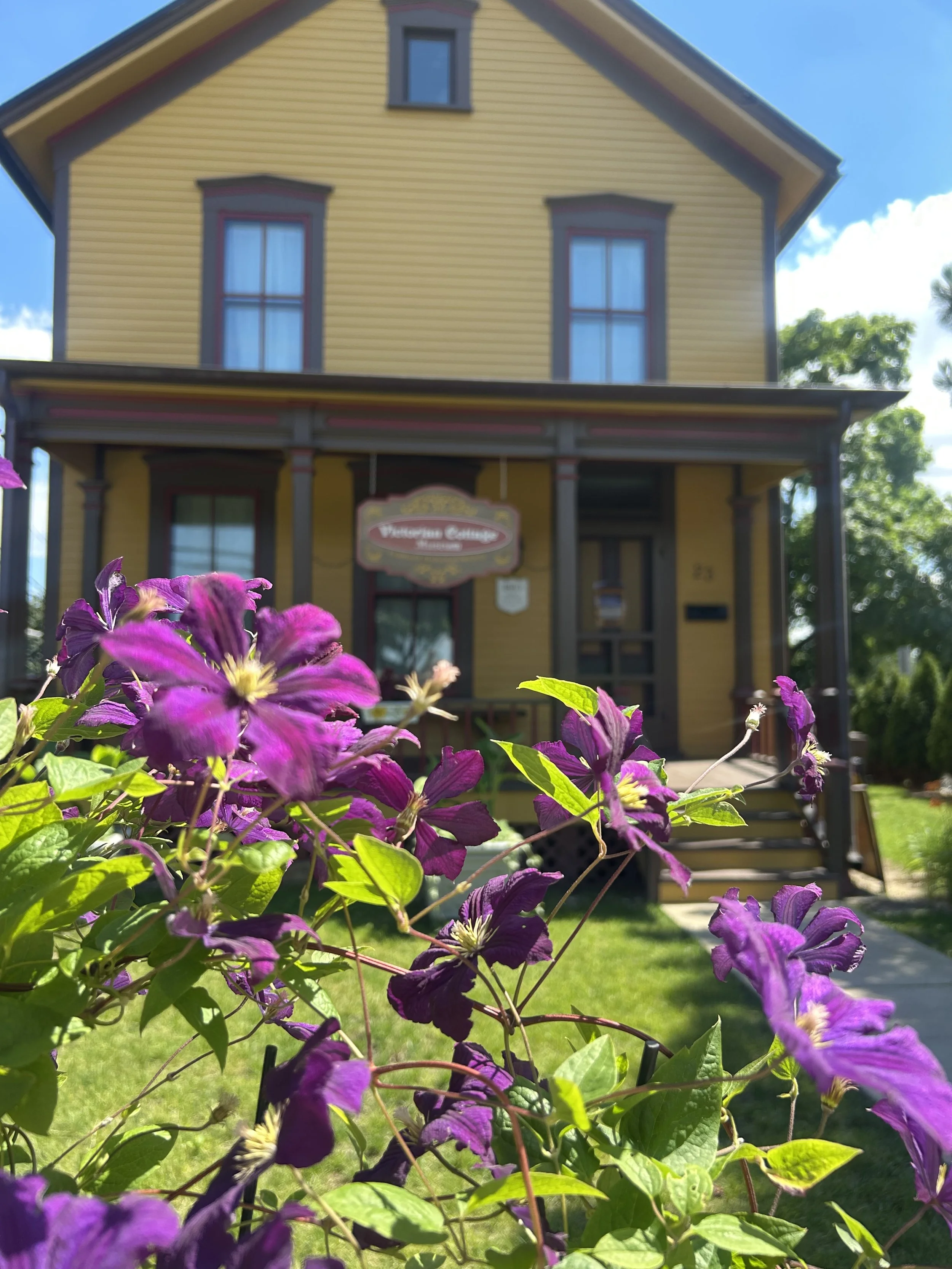
Victorian Cottage Museum, 2026.
Who belongs? Who is free? Who can move, vote, own property, and shape the community? Whose experiences become part of the historical record?
Those questions are at the heart of the American story. They have never been answered only in Washington. They have been answered repeatedly in local places—sometimes with courage, sometimes with resistance, and often through an incomplete process that later generations must revisit.
That is also the purpose of a historical society. It does more than preserve what a community once believed about itself. It returns to the evidence, asks new questions, corrects old assumptions, and makes room for people whose stories were overlooked.
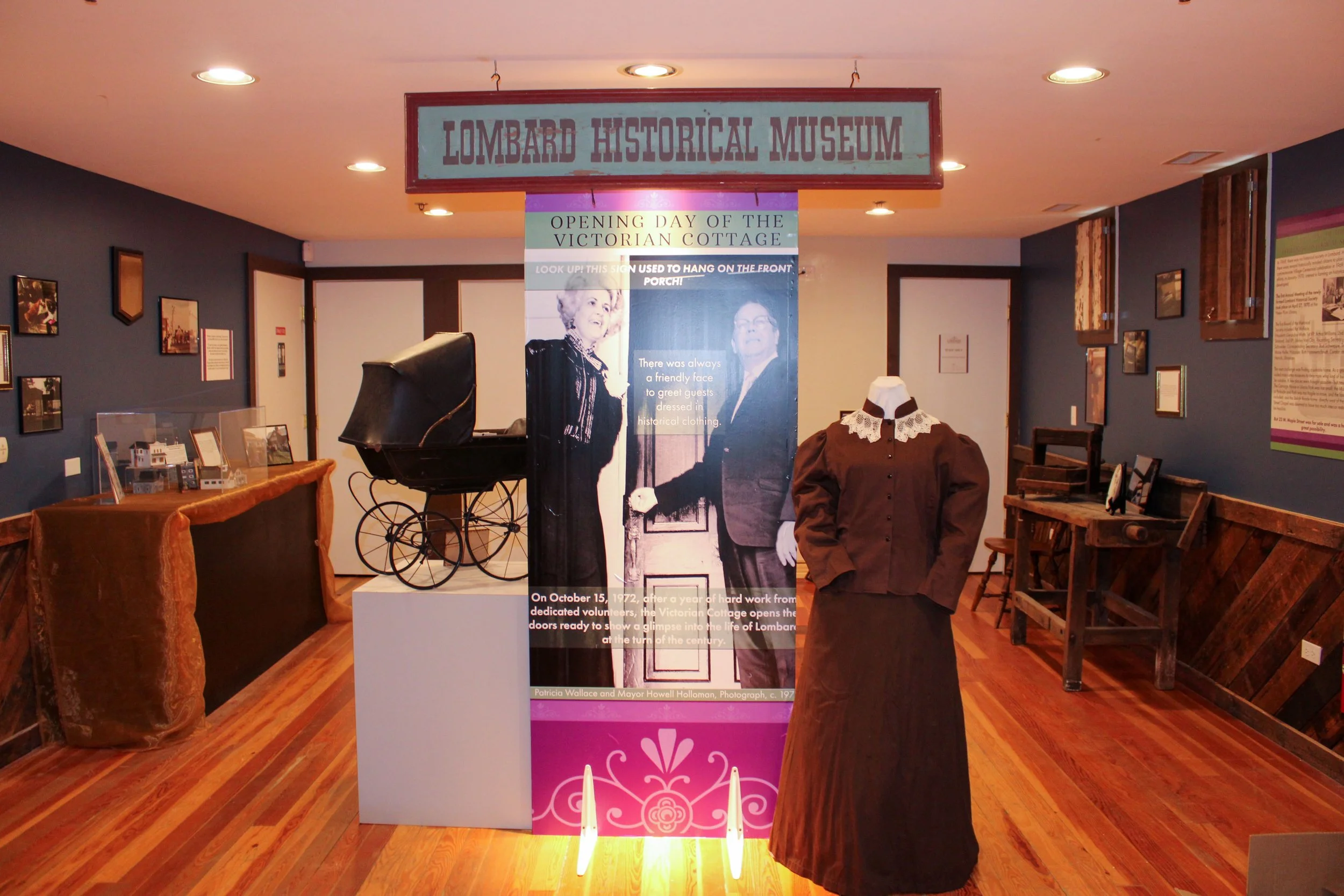
50 Years of the LOMBARD Historical Society, Exhibition, 2022.
In 1969, Lombard’s centennial helped inspire residents to establish the Lombard Historical Society. In 1976, the Bicentennial led volunteers to record the community’s history in Footsteps on the Tall Grass Prairie. In 2026, America’s 250th anniversary offers another opportunity—not simply to celebrate what has been accomplished, but to deepen and broaden the story we pass forward.
The Fourth of July commemorates a declaration of principles. Lombard’s history reveals the demanding work that follows: deciding what liberty, citizenship, equality, and community will mean in the lives of actual people.
America’s story did not merely pass through Lombard. It happened here—and it is still being written.
Share Your Story
As part of America 250, we invite you to share your own Lombard story through family memories, photographs, neighborhood experiences, and moments from everyday life. By contributing, you are helping the Lombard Historical Society preserve a fuller picture of our community for future generations. Today’s moments will become tomorrow’s history.
