
Love, Justice, and the Power of Words: Sheldon Peck and the Connection to Frederick Douglass
/A Lombard Connection to a National Movement…

Sheldon and Harriet Peck, Peck Homestead, Lombard Historical SOciety Collection, 1860s.
The Sheldon Peck Homestead was more than a family home. In the mid-1800s, it was a place where conversations about justice, reform, and responsibility were part of everyday life.
Sheldon Peck and his wife Harriet were deeply involved in both the abolitionist and temperance movements. They believed that social change required both public action and personal commitment, and they welcomed speakers into their home who shared those values.
One of those visitors was John Jones, a free born African American leader active in the Chicago anti slavery movement and later a key figure in the fight to repeal Illinois’ Black Laws.
Their son Frank Peck was still a child at the time, but years later he wrote about what he remembered hearing in his parents’ home. His journal entries are not formal accounts. They are the memories of a boy who grew up listening to adults wrestle with big ideas and difficult truths.
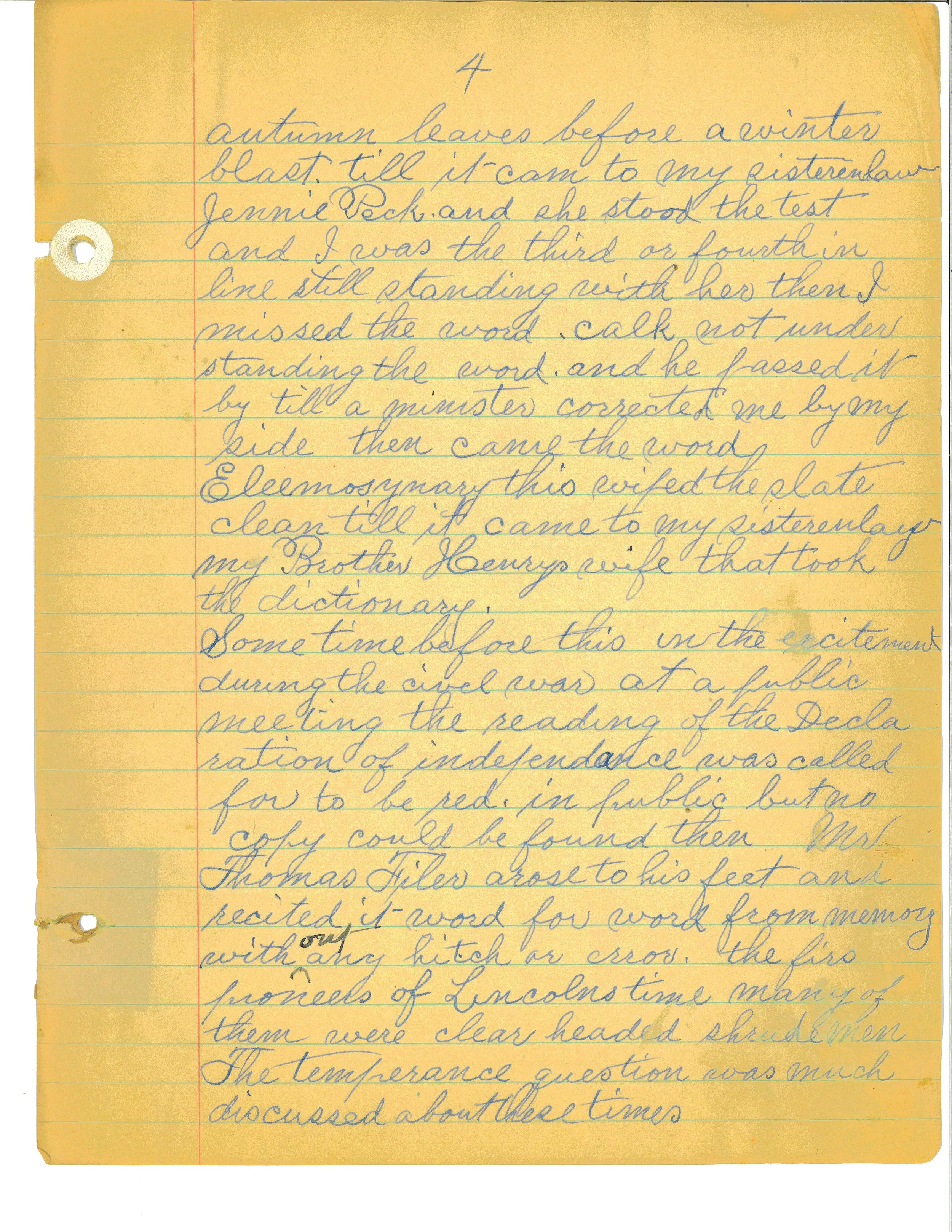
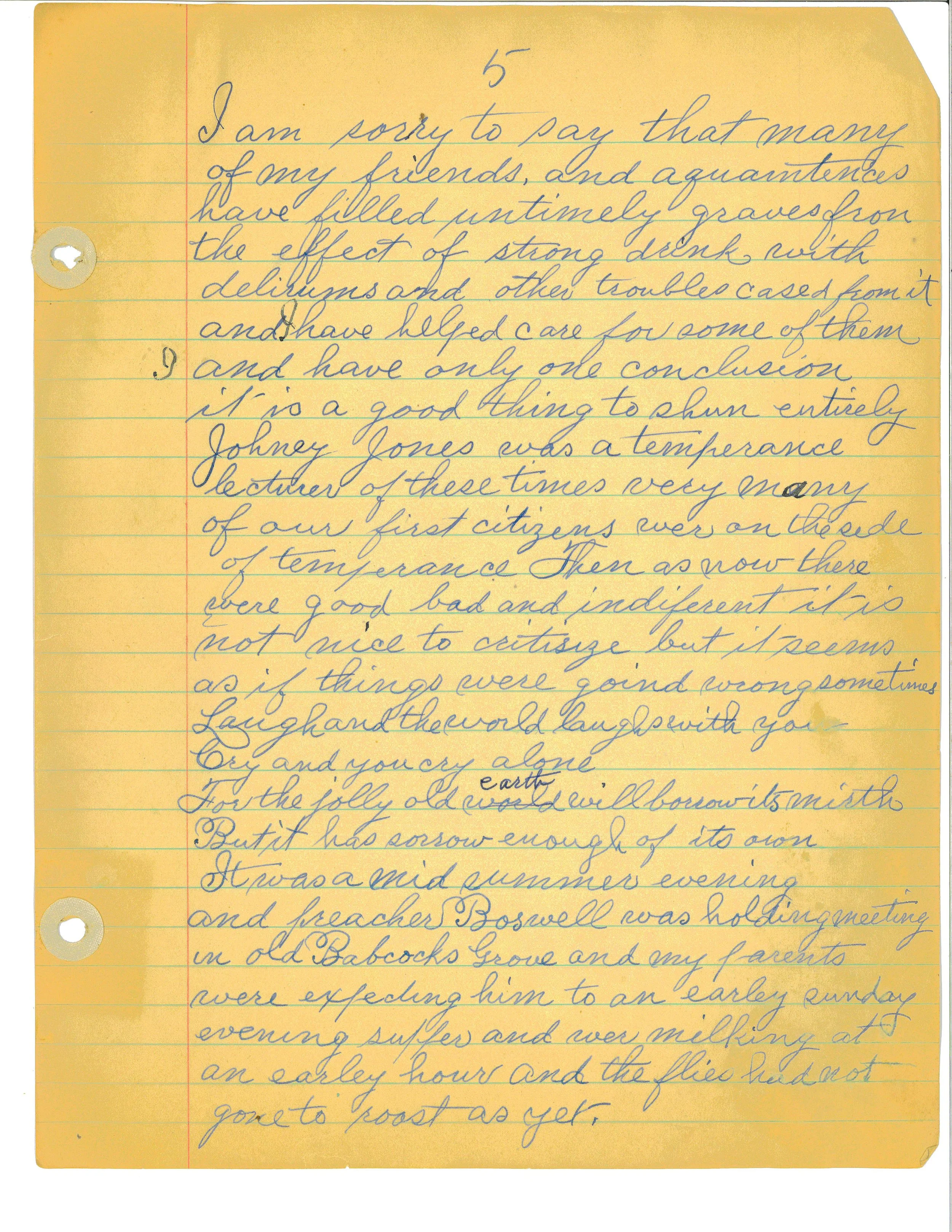
The temperance question was much discussed about three times. I am sorry to say that many of my friends, and acquaintances have filled untimely graves from the effect of strong drink with deliveries and other troubled cases from it an have helped care for some of them and have only one conclusion it is a good thing to shun entirely. Johney (sic) Jones was a temperance lecturer of three times very many of our first citizens were on the side of temperance. Then as now there were good bad and indiferent (sic) it is not nice to critisize (sic) but it seems as if things were joined wrong sometimes. Laugh and the world will laugh with you. Cry and you cry alone. For the jolly old earth will borrow its mirth But it has sorrow enough of its alone.
Frank Peck Journals, Lombard Historical Society, from the Peck Mertz Collection, nd.
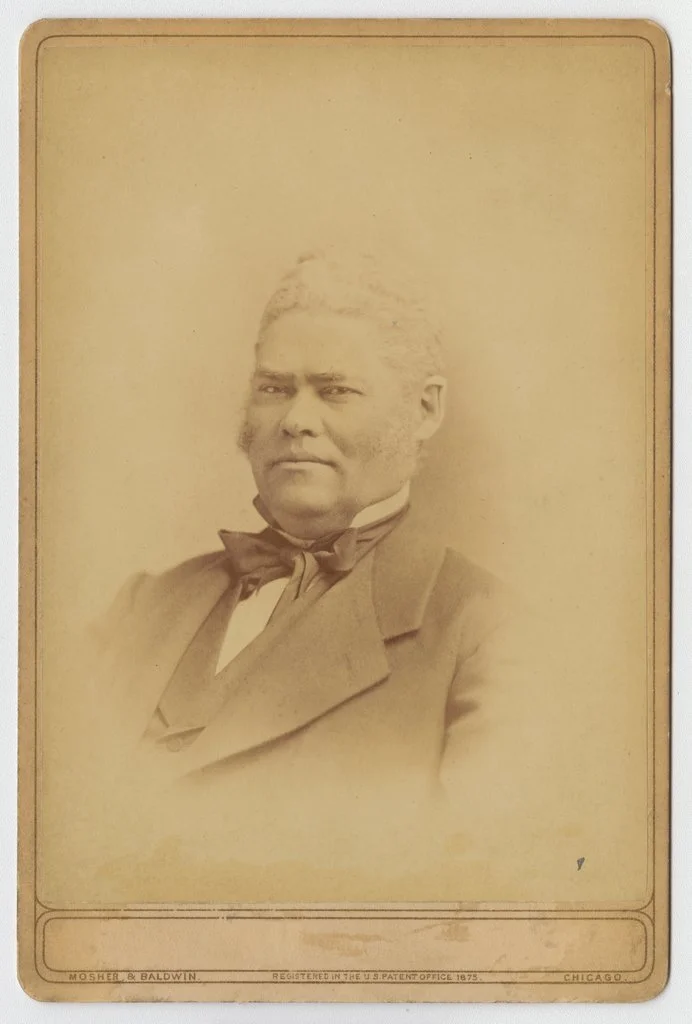
Portrait of John Jones, circa 1882. Mosher & Baldwin, photographer, 1882.
Frank recalled that John Jones visited multiple times as a temperance lecturer. In his writing, Frank reflected on how often temperance was discussed and how deeply the issue affected those around him. He remembered friends and acquaintances who died too young from the effects of strong drink and noted that he had helped care for some of them. From those experiences, he wrote that he came to believe it was a good thing to avoid it entirely.
He also remembered that many of the community’s leading citizens supported the temperance cause. At the same time, Frank acknowledged the complexity of people and movements, writing that then as now there were good, bad, and indifferent. He cautioned against harsh criticism, recognizing that reform was never simple and people did not always get things right.
Frank closed this reflection with a short piece of poetry that stayed with him:
“Laugh and the world will laugh with you.
Cry and you cry alone.
For the jolly old earth will borrow its mirth,
But it has sorrow enough of its own.”
Through Frank Peck’s memories, we see the Peck Homestead as a place where reform movements overlapped and where children absorbed the values being discussed around them. Abolition, temperance, and the belief that words and actions mattered were part of daily life.
Those same networks connected the Peck family to the broader world shaped by Frederick Douglass. Douglass was a powerful writer and speaker who spent his life fighting for education, equal rights, and justice. Born into slavery and denied even the knowledge of his own birth date, he later chose February 14 as the day he would celebrate his birthday as an act of reclaiming identity and dignity.
Sources
Frank Peck Journals, Sheldon Peck Homestead collections.
Frank Peck’s recollections of speakers hosted by his parents, including John Jones, written from the perspective of a child remembering conversations around abolition and temperance. Quotations reproduced with original spelling noted where applicable.John Jones
Biographical information drawn from Illinois abolitionist history and Jones’s documented role as an anti slavery advocate, temperance lecturer, and leader in the movement to repeal Illinois’ Black Laws.Sheldon Peck and Harriet Peck
Historical records and family accounts documenting their involvement in the abolitionist and temperance movements and their role in hosting reform speakers at the Peck Homestead.Frederick Douglass
Frederick Douglass Papers Project, Library of Congress, and related scholarship documenting Douglass’s life, writings, speeches, and the choice of February 14 as his birthday.Frederick Douglass Papers Project.
Primary source documents including speeches, correspondence, and writings that preserve Douglass’s voice and support ongoing public history initiatives such as Douglass Day.Lombard Historical Society Archives.
Interpretive research, site history, and curatorial materials related to the Sheldon Peck Homestead and its role in 19th century reform movements.
